Stop chewing on that side and do not tighten, glue, remove, or repeatedly wiggle the implant or crown. By checking the symptoms, recording what changed, and contacting the right dental service, you can help distinguish a loose restoration from a mobile implant fixture and recognise signs that need same-day care.
Key takeaways
- Stop chewing on that side and contact an implant follow-up dentist.
- Do not twist, glue, or remove a loose implant component yourself.
- A moving crown needs prompt review; a mobile fixture needs urgent assessment.
- Seek same-day care for severe pain, swelling, fever, or uncontrolled bleeding.
What to do immediately when a dental implant feels loose
Stop chewing on that side and contact an implant follow-up dentist promptly. The answer to “loose uncomfortable dental implant what to do” begins with protecting the area, not trying to fix it yourself.
- Do not twist, tighten, remove, glue, or push the crown, bridge, abutment, or implant.
- Choose soft foods and chew on the opposite side until you are examined.
- Keep brushing the surrounding teeth gently, but do not force floss or instruments under the restoration.
- If the visible crown comes out, place it in a clean container and take it to the appointment.
- Tell the dentist when the movement began, whether it followed biting something hard or an injury, and whether your bite has changed.
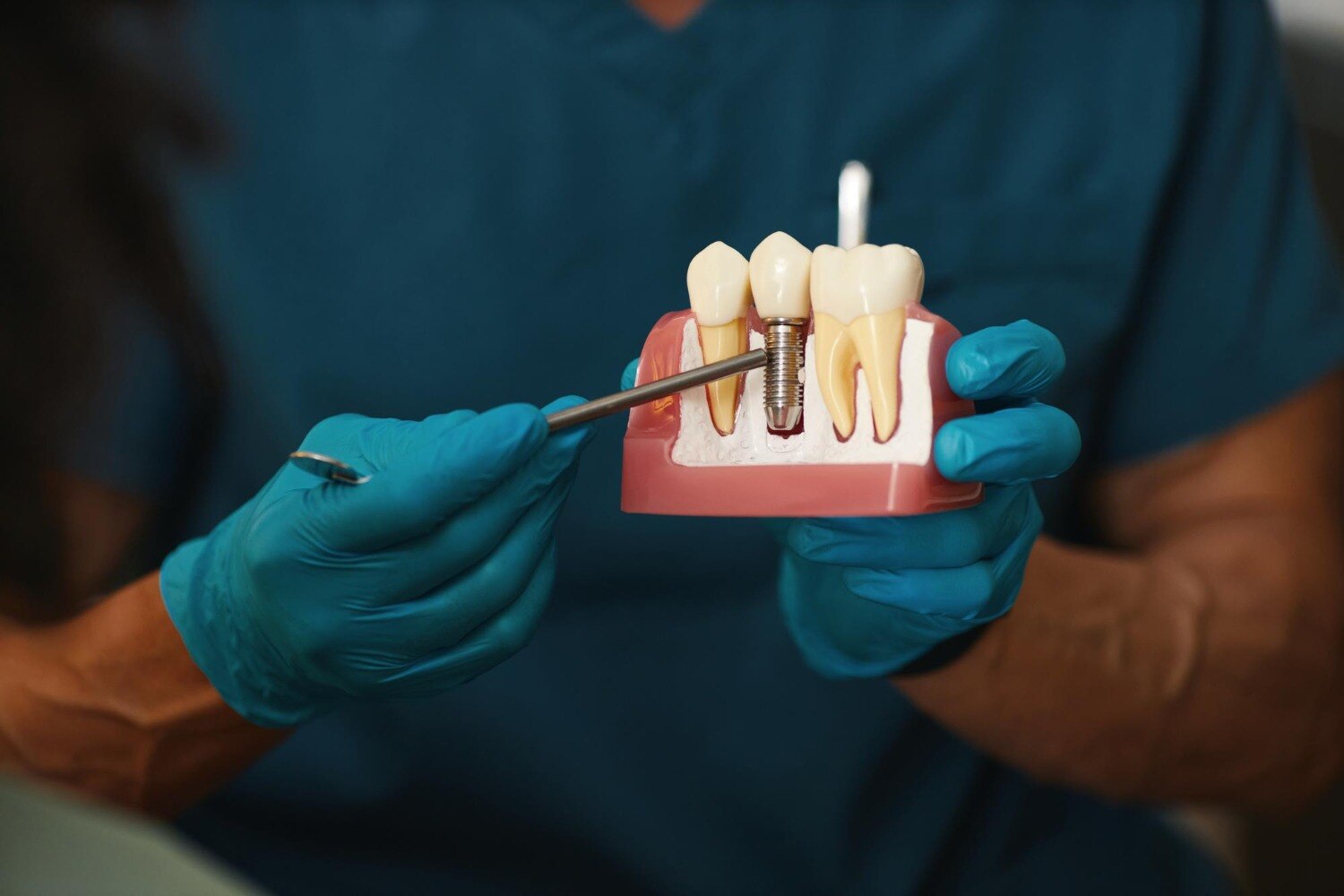
A dental implant feels loose for different reasons. The crown or abutment screw may have loosened while the titanium fixture remains stable, or the fixture may have lost its bone support. Those problems need different treatment, so do not assume tightening the crown will solve it.
Pain and swelling often peak during the first 48 to 72 hours after surgery and then improve. Seek same-day dental care for increasing pain or swelling, pus, fever, foul taste, persistent bleeding, or a loose fixture.
Go to emergency care for rapidly spreading facial swelling, trouble swallowing or breathing, or swelling near the eye or neck. A loose implant can have little pain, so comfort alone does not confirm safety.
Is the crown moving, or is the implant fixture mobile?
A dental implant feels loose because the visible crown, the abutment screw beneath it, or the titanium implant fixture may be moving. Do not repeatedly wiggle the tooth to identify the source; that can damage a loose screw or irritate healing tissues.
| Component | What movement usually feels like | What confirms the source |
|---|---|---|
| Crown | The replacement tooth rocks, clicks, or shifts while the gum and nearby teeth remain stable | The dentist tests the crown and may remove it |
| Abutment screw | The crown moves or rotates on the implant, sometimes with a changed bite or clicking sensation | The dentist inspects the connection and checks the screw |
| Implant fixture | The entire implant moves with the crown, and the movement seems to come from the jawbone | Separate fixture testing and dental radiographs show whether integration has failed |
A crown can move while the implant remains firmly fixed in bone. That mechanical problem may need screw tightening, screw replacement, or crown repair rather than implant removal. Do not glue the crown or try to tighten it yourself.
The dentist may compare current and previous radiographs, check your bite, examine the crown and abutment, and assess the surrounding tissues. They may remove the crown to test the fixture directly. Fixture mobility is more urgent because it can indicate failed osseointegration, even when pain is mild or absent.
Until assessed, avoid chewing hard or sticky foods on that side and arrange prompt implant follow-up.
Which dental implant discomfort needs same-day care?
Normal healing causes tenderness, mild swelling, or sensitivity that gradually improves over the first days after surgery. Dental implant discomfort needs same-day assessment when pain worsens, the bite suddenly feels high, or the area develops pus, foul taste, increasing redness, or bleeding that does not stop with firm gauze pressure.
| Finding | More consistent with normal healing | Needs same-day assessment |
|---|---|---|
| Pain or swelling | Mild and steadily improving | Increasing, severe, or returning after improvement |
| Soft tissue | Tenderness without pus | Pus, foul taste, persistent bleeding, or spreading redness |
| Implant movement | No movement of the fixture | Fixture mobility after healing, suggesting failed osseointegration |
| Bite | Temporary sensitivity | Pain when biting or a crown that contacts first, suggesting bite overload |
| Tissue around implant | No ongoing bleeding | Bleeding or inflammation; mucositis affects soft tissue, while peri-implantitis also causes supporting-bone loss |
A loose crown or abutment screw can move while the titanium fixture remains fixed, but only an examination can confirm that distinction. A genuinely mobile fixture is not a normal healing symptom and requires prompt assessment; peri-implant disease can be serious even before visible mobility develops.
Treat rapidly increasing facial swelling, fever, difficulty swallowing or breathing, uncontrolled bleeding, or swelling near the eye or neck as an emergency. Seek urgent medical or dental care rather than waiting for a routine appointment.
How to check the area safely before calling the dentist
Use a mirror and bright light to observe the area without touching it. Look for a lifted crown, a gap at the gumline, redness, swelling, pus, bleeding, a cracked ceramic surface, or food trapped around the restoration. Do not press the crown with your finger or tongue to test movement.
1. Note when the discomfort or movement began, whether it followed biting something hard, and whether it occurs at rest or only when chewing. Record worsening pain, a foul taste, fever, facial swelling, or bleeding.
2. Compare your bite gently by closing your teeth once. If the implant tooth hits before the others or feels higher, tell the dentist; do not keep clenching to check it.
3. Avoid chewing on that side, and avoid hard, sticky, or chewy foods. Do not tighten a screw, glue the crown, pull at it, or repeatedly wiggle it. Keep the area clean with gentle brushing, but do not probe under the gum.
4. Contact an implant follow up dentist promptly and report the implant’s location, the date it was placed or restored, the symptoms, and any medical factors such as diabetes, smoking, previous gum disease, or recent dental treatment.
Mention whether the visible tooth seems loose or whether the gum and jaw area feel mobile, while making clear that you did not test it forcefully.
Bring medication details and any photographs showing swelling or a changed crown position.
What the dentist will test and how follow-up protects the implant
An assessment identifies whether the moving part is the crown, abutment screw, or implant fixture. The dentist reviews your medical and dental history, inspects the gum, tests each component separately, checks your bite, and measures tissue around the implant with a periodontal probe.
Current and earlier dental radiographs reveal bone changes; the dentist may remove the crown to test the fixture directly.
- Increasing dental implant discomfort, swelling, pus, fever, foul taste, or bleeding after the first 48–72 hours needs prompt review.
- Rapid facial swelling, difficulty swallowing or breathing, uncontrolled bleeding, or swelling near the eye or neck requires emergency care.
- Do not let anyone tighten, glue, or repeatedly wiggle the restoration before the cause is confirmed.
| Problem | What testing may show | Usual treatment direction |
|---|---|---|
| Loose crown or bridge | Restoration moves while the fixture remains stable | Remove, clean, tighten or replace the prosthetic screw, then adjust the bite |
| Abutment screw problem | Screw loosening or fracture separates the restoration from the implant | Replace the screw or repair the connection |
| Mobile implant fixture | Movement remains after the crown is removed, often with bone or tissue changes | Treat infection or bone loss; removal and later replacement may be necessary |
An implant follow up dentist is the right next decision when movement persists, discomfort worsens, or your bite changes. Follow-up radiographs and bite checks catch overload or bone loss before further damage; Dr. Raman Dental, Hair And Skin Wellness Centre can assess the components and arrange the appropriate next step.
Related service
Dental Implant Dental implants are artificial tooth roots used to support a replacement tooth or bridge. View service → |
Frequently asked questions
What should I do immediately if my dental implant feels loose?
Stop chewing on that side, avoid touching or twisting the implant, keep the area clean, and contact an implant follow-up dentist promptly.
How can I tell whether the crown or implant fixture is moving?
A crown or bridge may move while the implant fixture remains stable. A fixture that moves with the gum or bone needs urgent professional assessment.
Which dental implant discomfort needs same-day care?
Seek same-day care for severe or worsening pain, facial swelling, fever, pus, uncontrolled bleeding, difficulty swallowing, or an implant fixture that moves.
What will the dentist test during an implant follow-up?
The dentist will check the crown, abutment, gum, bite, implant stability, and surrounding bone, using examination and imaging when needed.
Keywords