The right choice depends on the movement your teeth need, the health of your gums and supporting bone, and how consistently you can wear and clean removable trays. By the end, you will be able to compare aligner systems, identify warning signs that require braces or jaw-focused care, and judge a treatment plan beyond its brand name.
Key takeaways
- Choose aligners for movements they can control, not for the brand name.
- Check adult teeth, gums and jaw relationships before starting treatment.
- Plan to wear removable trays as directed and remove them for meals.
- Judge the clinician’s scan, staging, attachments and retention plan.
Match the appliance to the movement your teeth need
Crowding, spacing and mild bite changes are usually the best matches for clear aligners because trays move teeth through a series of small, planned stages. The right appliance changes when the movement is large, the jaw relationship is abnormal, or teeth cannot track the plan.
| Problem | Suitable appliance | Important limitation |
|---|---|---|
| Crowding | Clear aligners for mild to moderate cases; attachments may improve grip | Severe crowding may need extractions or fixed braces |
| Spacing | Clear aligners, sometimes with attachments | Check for missing teeth, gum disease or a tongue-thrust habit |
| Overbite or crossbite | Aligners with attachments and elastics for selected cases | A skeletal jaw discrepancy is not corrected by trays alone |
| Rotated teeth | Aligners for small rotations; attachments improve control | Large rotations, especially of rounded teeth, are less predictable |
| Orthodontic relapse | Short aligner treatment followed by retainers | The cause of relapse still needs assessment |
A rotated tooth that barely moves can leave gaps, a bite that does not meet properly, or a longer treatment than promised. Severe crowding, impacted teeth, major extrusion, complex underbite and movements requiring substantial root control often call for braces, limited fixed appliances, elastics or jaw-focused treatment.
There is no universally best option. If you are searching for which aligners are best in Vikas Puri, judge the diagnosis and movement plan, not the label. Examination of teeth, gums and bite matters; a scan alone cannot reveal decay, bone loss or every root problem. Retainers remain necessary after either aligners or braces.
Compare Invisalign, branded trays, laboratory aligners and braces
A brand name does not determine the right treatment. Search results for “best aligners vikas puri” are useful only if the provider first examines your teeth, gums, bite and jaw relationship; a scan alone cannot detect decay, bone loss or root problems.
| Option | Practical difference | Strengths and trade-offs |
|---|---|---|
| Invisalign | A widely used branded system with staged digital planning and clinician-supervised reviews | Removable and discreet; attachments may be needed, and success depends on wearing trays as instructed |
| Other branded trays | Commercial systems with their own software, materials and support protocols | Comparable convenience in suitable cases; compare refinement policy, clinician control and total cost rather than the logo |
| Laboratory or in-house trays | Trays made from a local laboratory workflow or clinic-designed plan | Can offer direct adjustments and flexible staging; quality depends heavily on the examination, design and follow-up |
| Traditional braces | Fixed brackets and wires apply continuous force and cannot be removed for meals | Better control for many severe rotations, large movements and complex bite problems; visible hardware makes brushing and eating more demanding |
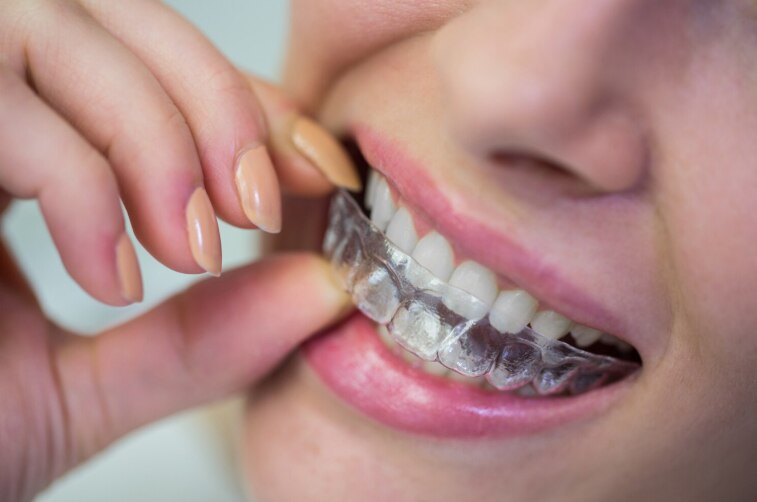
Attachments are small tooth-coloured shapes bonded to selected teeth. They improve grip for rotations and other movements, but food and plaque collect around their edges, so cleaning takes care.
A digital “straight smile” is a proposed result, not a guarantee. Ask what happens when a tray stops fitting, whether refinement trays cost extra and whether braces could become necessary. Retainers follow either option; ask about the wearing schedule, breakage, replacement and long-term reviews before you start.
Check whether your adult teeth and jaw are ready
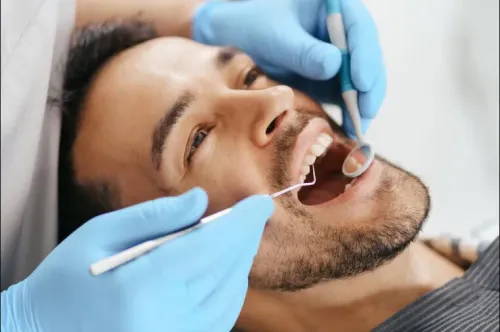
Before choosing aligner options for adults, confirm that your teeth, gums and jaw can tolerate orthodontic movement. A clinician should examine your teeth, gums, bite and jaw relationship, then use photographs and a digital scan; radiographs are needed when roots, bone levels, impacted teeth or jaw development require investigation.
A scan alone cannot reveal decay or bone loss.
| Check | Why it matters | What it may mean |
|---|---|---|
| Gum health | Inflamed or weakened supporting tissues can worsen during movement | Treat gum disease before alignment |
| Untreated decay | Moving a decayed tooth can complicate restoration and pain control | Restore the tooth first |
| Jaw relationship | Aligners move teeth, not the underlying jaw position | Consider orthodontic treatment with elastics, appliances or jaw-focused care |
| Impacted teeth or root problems | Hidden obstacles can make a planned movement unsafe | Obtain imaging and revise the plan |
| Grinding or poor cleaning | Force and plaque can damage teeth or attachments | Control the problem before treatment |
Aligner-only treatment is unsuitable until the clinician addresses:
- Active gum disease, significant bone loss, untreated cavities or teeth needing major restorations
- Severe crowding, large rotations, major extrusion, impacted teeth or complex bite correction
- A severe overbite, underbite, crossbite or skeletal jaw discrepancy that requires more than tooth tipping
- Poor adherence to cleaning, reviews and roughly 20–22 hours of daily wear
Ask how retainers, replacements and breakage reviews will be handled. Teeth can shift after treatment, so long-term retention is part of the treatment, not an optional final step.
Plan for the daily work of wearing removable trays
Plan for 20–22 hours of tray wear each day. Remove aligners for meals and for every drink except plain water; sipping tea, coffee or sugary drinks with trays in can stain them and trap acid against your teeth. Frequent removal also makes it harder to meet the daily target.
Speaking usually feels different for the first few days. A slight lisp can improve as your tongue adapts, so read aloud before an important presentation, meeting or phone call rather than removing the trays.
Keep the routine workable at work and while travelling. Carry a ventilated case, a spare toothbrush, toothpaste and the next tray if your clinician permits changing early. Store trays in the case, not a tissue, where they can be thrown away.
Contact sport requires a sports mouthguard that fits over the appliance, following your clinician’s advice. Remove aligners for singing only when necessary: repeated removal reduces wear time, while singing with them can affect diction until you adapt.
Clean your teeth before reinserting trays after eating. Rinse the aligners with cool or lukewarm water and clean them as instructed; hot water can distort plastic. Never put a dirty tray over unbrushed teeth.
When comparing clear aligners in West Delhi, ask what happens if a tray is lost or an attachment comes off. A plan that fits your meals, rehearsals, travel and work is easier to finish than one you cannot wear consistently.
Judge the clinician’s plan, not just the aligner label
A credible plan starts with your teeth and gums, not the tray brand. A search for aligners dentist near me should lead to questions about who examines you, who designs the stages, and who manages problems when teeth do not track.
- Ask whether the examination includes decay, gum health, existing crowns or fillings, tooth roots and your bite, with radiographs when indicated.
- Ask which movements require attachments, interproximal reduction (IPR), extractions or another appliance, and whether each step appears in a written treatment plan.
- Ask who reviews the case and how often you will attend in-person checks; reviews should assess tooth movement, gums, bite and attachment condition.
- Ask what happens if an aligner is lost, an attachment comes off or a sharp edge injures your cheek, including who provides urgent care.
- Request an itemised fee covering scans, attachments, IPR, refinements, replacement trays, reviews and retainers. A low starting price can rise when these are separate.
- Ask for the expected treatment stages and the rule for changing trays. Wearing removable aligners about 20–22 hours daily matters; less wear can lengthen treatment.
- Treat retention as part of the fee and plan. Confirm the retainer type, nighttime schedule, replacement cost and follow-up if it breaks.
Dr. Raman Dental, Hair And Skin Wellness Centre can be judged by these same details: the quality of its examination, written plan and aftercare—not by a “best aligners” claim. A provider who cannot explain those details has not given you enough information to compare options.
Frequently asked questions
Which tooth movements suit clear aligners?
Clear aligners usually suit crowding, spacing and mild bite changes. Large movements, abnormal jaw relationships or teeth that cannot track the plan may require braces or another approach.
How do Invisalign, branded trays, laboratory aligners and braces differ?
Compare the clinician’s supervision, treatment planning, material, attachments, refinement policy and retention plan rather than relying on the aligner label alone.
Are clear aligners suitable for every adult?
Your adult teeth, gums, supporting bone and jaw relationship need assessment first. Active gum disease, untreated decay or complex jaw problems can change the recommended appliance.
What daily work do removable aligners require?
Wear trays for the prescribed time, remove them for eating, clean your teeth before replacing them and keep each tray safe when it is out.
How should you choose an aligner dentist near you?
Ask how the clinician diagnoses your bite, stages movements, checks tracking, handles refinements and plans retention. A local consultation, such as with Dr. Raman Dental, Hair And Skin Wellness Centre in Vikas Puri, lets you discuss these details in person.
Keywords