Philips Zoom gels lighten natural enamel, not porcelain, zirconia, ceramic, composite, or metal crowns, so whitening can make a front crown look darker by comparison. The right choice depends on which teeth are natural, the condition of each restoration, the speed you want, and whether the crown will need replacement after the natural teeth reach their new shade.
Key takeaways
- Philips Zoom whitens natural teeth, not crowns, veneers, bridges, or fillings.
- Plan whitening before replacing a visible crown to match the final shade.
- Choose in-office treatment for speed or supervised trays for gradual control.
- Ask how the dentist will match a new crown to your whitened teeth.
What Philips Zoom can and cannot whiten when crowns are present
Philips Zoom whitening gel lightens natural tooth structure, not artificial restoration material. It does not bleach a crown, bridge, veneer, or filling, so whitening with dental crowns treats the natural teeth around a crown rather than the crown itself.
The restorations that remain at their original shade include:
- Porcelain, ceramic, zirconia, and metal-based crowns
- Bridges and veneers
- Composite fillings
Natural teeth beside a restoration can become lighter while the restoration stays unchanged. That contrast makes a mismatch more visible, especially when one front crown sits among whitened natural teeth. Teeth whitening with restorations can therefore produce uneven colour even when the natural enamel responds normally.
A dark area around a crown is not always a dark crown. Surface staining at the margin may improve with professional cleaning or polishing, while a crown that is internally the wrong colour will not change with whitening. The same applies to a poorly matched crown or one with fractured porcelain.
Philips Zoom cannot correct an open margin, decay, leakage, or structural damage; those problems need examination and treatment, which may involve repair or replacement. Increasing gel strength will not make an incorrectly coloured crown match.
Which teeth need planning before you choose a Zoom option
Philips Zoom alone does not identify a suitable treatment. Philips Zoom with crowns depends on which teeth are natural, how much tooth shows, the restoration’s material, and your starting shade.
| Situation | Planning point | Why it matters |
|---|---|---|
| Natural teeth beside one crown | Measure visible enamel around the crown | Natural teeth lighten; the crown does not |
| Single visible front crown | Record the crown shade and neighbouring tooth shade | Whitening can make a mismatch more obvious |
| Multiple crowns | Map natural and restored surfaces | The final colour may vary across the smile |
| Implant crown | Identify the crown and abutment area | Whitening cannot change the implant crown |
| Bridge | Record every visible unit and the supporting teeth | One bridge can span natural teeth and artificial materials |
| Veneers | Check veneer edges and exposed enamel | Only exposed natural enamel responds |
| Composite fillings | Mark each visible filling | Composite stays at its original shade |
| Temporary crown | Confirm its material and replacement plan | Whitening before the final restoration needs coordinated shade planning |
For Philips Zoom for crowned teeth, the dentist must record the starting shade, natural surfaces, and the amount of tooth visible around each restoration. A dark crown also needs diagnosis: surface staining, margin leakage, decay, discoloration inside a root-treated tooth, or the crown material itself.
Before whitening, ask for examination of gum inflammation, exposed roots, cracks, and significant sensitivity. Whitening can worsen sensitivity or irritate inflamed gums. Active disease, leakage, or a poorly fitting restoration calls for assessment and treatment, not a product choice.
In-office Zoom or supervised take-home trays: which fits your situation
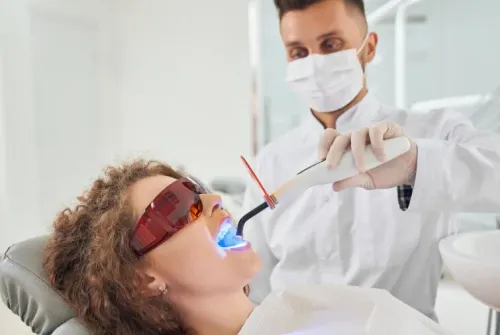
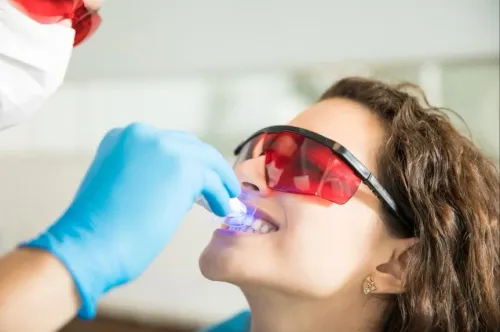
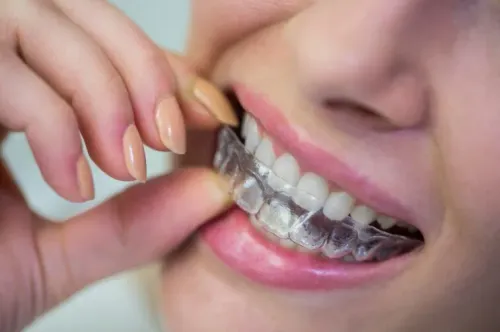
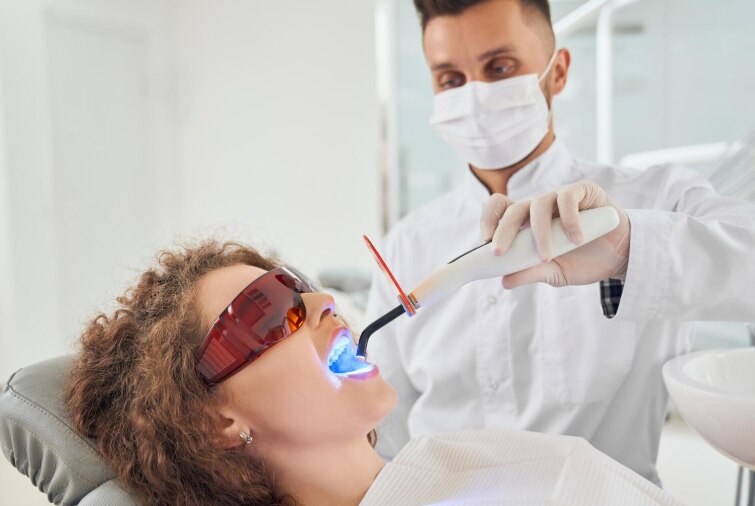
In-office Philips Zoom is the faster route for lightening natural teeth when speed matters or many natural surfaces show; dentist-supplied take-home trays suit a slower, adjustable course when sensitivity control and gradual shade change matter. Neither option changes the colour of a crown.
| Option | Main advantage | Best fit |
|---|---|---|
| In-office Philips Zoom | Faster lightening of natural enamel | A deadline or many visible natural teeth |
| Supervised take-home trays | Slower, adjustable shade change | Sensitivity history or preference for gradual results |
| Either option | Does not bleach the crown | Natural teeth beside porcelain, ceramic, zirconia, or metal restorations |
For Philips Zoom for crowned teeth, the crown itself does not determine the choice. The clinician considers how much natural enamel is visible, where it sits around the restoration, your target speed, your sensitivity history, and the examination findings. A single front crown needs closer shade planning than several hidden restorations.
Philips Zoom with crowns is external whitening, not internal bleaching for a dark non-vital tooth beneath a crown. Darkness can come from staining at the margin, leakage, discoloration inside a root-treated tooth, or the crown material itself. The source must be identified before treatment; stronger external gel will not solve an internally discoloured tooth.
How the dentist matches a crown to the whitened teeth
For a new visible restoration, the dentist examines and cleans first, whitens the natural teeth, allows the shade to stabilise according to the product and patient assessment, then reassesses colour before selecting or fabricating the restoration.
- Examine the teeth, gums, existing restorations, and any surface staining. Clean and treat problems before whitening.
- Whiten the natural teeth with the agreed Philips Zoom method.
- Allow the shade to settle for the interval the clinician chooses based on the product and your response; there is no universal waiting period.
- Reassess the colour in suitable lighting, then select or fabricate the crown, veneer, bridge unit, or other visible restoration to match it.
Fabricating a crown first creates a fixed shade target. If the surrounding natural teeth are whitened later, they can become lighter while the crown stays unchanged, producing a mismatch. This is the central issue in whitening with dental crowns and teeth whitening with restorations.
If an existing front crown is too dark, stronger gel will not bleach it. The predictable shade change usually requires whitening the natural teeth first, allowing the colour to stabilise, then replacing the crown to match.
A crown with only margin staining follows a different path. The dentist investigates the area and then cleans or polishes it; suspected leakage, decay, fractured porcelain, damage, or poor fit calls for repair or replacement as indicated. Whitening should not conceal those problems.
What to ask at a West Delhi dental consultation before treatment
At your appointment, use this checklist before choosing Philips Zoom with crowns:
- Which visible teeth are natural, and how much natural tooth shows beside each restoration?
- What material is each crown, bridge, veneer, filling, implant crown, or temporary crown made from?
- Is the darker area surface stain, leakage, decay, underlying tooth discoloration, or simply the crown’s colour?
- Could whitening make the visible mismatch greater?
- Which teeth will be treated, and when will the final shade be reassessed?
- Does in-office Philips Zoom or a supervised take-home tray better suit my desired speed and sensitivity level?
| Option | Speed and sensitivity | When it fits |
|---|---|---|
| In-office Philips Zoom | Faster change; less control between sessions | You want quicker lightening across visible natural teeth and have suitable clinical findings |
| Supervised take-home trays | Slower, adjustable change; easier sensitivity control | You prefer gradual whitening or have a history of sensitivity |
For whitening with dental crowns, the crown itself does not decide between these options; natural-tooth distribution, desired speed, sensitivity, and examination findings do. Neither option bleaches porcelain, ceramic, zirconia, metal-based crowns, bridges, veneers, or composite restorations.
Untreated decay, inflamed gums, exposed roots, cracks, significant sensitivity, leaking restorations, or a poorly fitting crown require evaluation before whitening. Dr. Raman Dental, Hair And Skin Wellness Centre in Vikas Puri can combine examination, cleaning, shade evaluation, and restoration planning, rather than selecting a Zoom option from its name alone.
Related services
Philips Zooms Tooth Whitening We provide Philips Zooms Tooth Whitening in Vikas Puri Delhi View service → |
Philips Zoom Teeth Whitening We provide Philips Zoom Teeth Whitening Services in Vikas Puri Delhi View service → |
Frequently asked questions
Can Philips Zoom whiten teeth that have crowns?
Philips Zoom lightens natural tooth structure around a crown, but it does not change the colour of crowns, bridges, veneers, or fillings.
Which crowned teeth need planning before Philips Zoom whitening?
Plan carefully when a crown, bridge, veneer, or filling is visible in your smile, especially if you may replace it after whitening.
Should I choose in-office Zoom or supervised take-home trays?
In-office Zoom suits people who want a faster appointment-based result. Supervised take-home trays suit people who prefer gradual whitening with dentist guidance.
How does a dentist match a crown to whitened teeth?
The dentist records the planned tooth shade after whitening and uses it to select the colour for a new crown or restoration.
What should I ask during a West Delhi consultation?
Ask which teeth are natural, which restorations will not whiten, whether replacement is needed, which option suits you, and how the final crown shade will be selected.
Related services
Dental Bleaching We provide the dental bleaching services in Vikas puri View service → |
Crown & Bridge we provide teeth crown and bridge in Vikas puri Delhi View service → |
Keywords